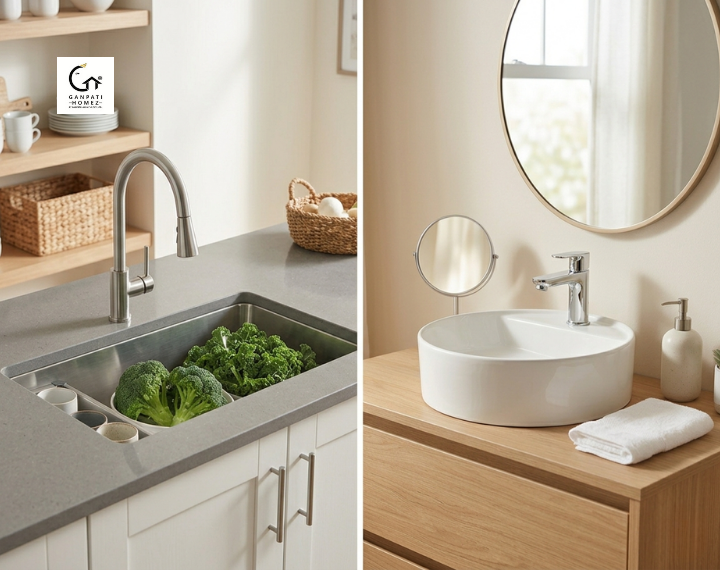
We used to think a sink and a wash basin were basically the same thing just different names we threw around without really thinking. If it held water and had a drain, it was all the same to us. Simple, right?
But that idea started to shift once we paid a little more attention. In the kitchen, the sink was clearly doing the heavy lifting handling dishes, food prep, and everyday mess like a pro. Meanwhile, in the bathroom, the wash basin felt different. Cleaner, more refined, built for quick routines rather than tough chores.
That’s when it clicked for us. The whole sink vs wash basin confusion isn’t really about how they look, it's about what they’re meant to do. Although they appear similar at first glance, they serve completely different purposes.
And once we noticed that difference, it just made everything a lot clearer.
A sink is a deep, fixed bowl-shaped fixture mainly used in kitchens for washing utensils, cleaning food, and handling everyday mess.
What makes a sink different is how it’s built for real work. It’s usually deeper, stronger, and designed to handle heavy use hot water, greasy pans, sharp utensils, all of it. It’s not just about holding water; it’s about managing the kind of tasks that happen daily in a busy kitchen.
One unique thing about a sink is its focus on practicality. Everything from its size to its material is designed to make cleaning easier and more efficient, even when things get messy.
Mordor Intelligence projects that the Indian kitchen sink market will grow from USD 301.32 million in 2025 to USD 332.06 million in 2026 and reach USD 521.3 million by 2031, growing at a CAGR of 11.24%.
A wash basin is a smaller, open bowl-shaped fixture commonly used in bathrooms for personal hygiene tasks like washing hands, face, and brushing teeth.
What sets a wash basin apart is its focus on comfort and appearance. It’s designed for light, quick use rather than heavy cleaning. You’ll often notice that it looks more refined and fits neatly into the overall bathroom design.
A unique thing about a wash basin is how it balances function with style. It’s not just there to be used it also adds to the look and feel of the space, making everyday routines a bit more pleasant and organized.
The Indian Wash Basins Market size was USD 1304.55 Million in 2024 and is projected to reach USD 2175.62 Million by 2033, according to Deep Market Insights.
At a glance, they may look similar. But in everyday use, the difference becomes very clear. It’s not just about terminology, it's about purpose, design, and how each one fits into a specific part of your home.
Here’s a more practical breakdown of the sink vs wash basin difference:
Purpose:
A sink is designed for kitchen tasks like washing utensils, cleaning vegetables, and handling daily mess.
A wash basin is meant for personal hygiene such as washing hands, face, and brushing teeth.
One supports household work, the other supports daily personal routines.
Placement:
A kitchen sink is installed in kitchens or utility areas where heavy tasks happen.
A bathroom wash basin is placed in bathrooms or powder rooms for quick and frequent use.
Their location directly reflects their function.
Design & Depth:
A sink is deeper and wider to accommodate large utensils and reduce splashing.
A wash basin is more compact and shallow, making it convenient for quick use.
The design is shaped by how much workload each one handles.
Material & Strength:
Sinks are usually made from durable materials like stainless steel, granite composite, or quartz to handle heat, stains, and impact.
Wash basins are commonly made from ceramic, porcelain, glass, or stone, focusing more on smooth finish and appearance.
One is built for strength, the other for comfort and style.
Usage Level:
A sink handles continuous, heavy-duty use throughout the day.
A wash basin is used for lighter, short-duration tasks multiple times a day.
The intensity of use is very different.
Function vs Appearance:
A sink focuses more on efficiency and practicality.
A wash basin balances usability with design and often enhances the overall look of the bathroom.
Features & Flexibility:
Sinks may include additional features like double bowls, drainboards, or waste disposals for better functionality.
Wash basins are usually simpler, with a focus on ease of use and clean design.
So when comparing sink vs basin or wash basin vs sink, the real difference lies in how they are used, where they are placed, and what they are built to handle. Understanding this makes it much easier to choose the right option for your space.
Not all sinks are the same and honestly, the difference becomes obvious the moment you start using them. Some are built purely for convenience, while others quietly upgrade the entire kitchen experience.
Here are the most common types you’ll come across:
Top-Mount Kitchen Sink (Drop-in Sink): This is the one most of us have seen. It sits on top of the countertop with its edges visible. Easy to install, easy to replace, and works well in almost any kitchen setup.
Undermount Sink: Installed below the countertop, giving a smooth and seamless finish. Cleaning becomes easier since there are no edges to trap dirt. It’s a popular choice in modern kitchens for a cleaner look.
Farmhouse Sink (Apron Front): Large, deep, and designed to stand out. The front panel is exposed, giving it a bold and classic appearance. Ideal if you need more space for washing bigger utensils.
Double Bowl Sink: Designed for multitasking. You can wash in one section and rinse or drain in the other. It’s practical for busy kitchens where efficiency matters.
Integrated Sink: Built as one piece with the countertop. No joints, no gaps. It looks minimal and is very easy to maintain, especially in contemporary kitchen designs.
Each type of kitchen sink is designed with a specific need in mind. So when choosing, it really depends on how you use your kitchen every day.
When it comes to wash basins, there’s a lot more variety than most people expect. Today, it’s not just about function it’s also about how the space looks and feels.
Here are some popular options:
Wall-Mounted Basin: Fixed directly to the wall, this type saves space and keeps the floor area clear. A great choice for compact bathrooms or minimal designs.
Countertop Basin: Placed on top of the counter like a bowl. It instantly adds a modern and stylish touch, often becoming the focal point of the bathroom.
Pedestal Basin: A classic design where the basin is supported by a stand. It hides plumbing and gives a clean, traditional look.
Under-Counter Basin: Installed beneath the counter, leaving only the basin visible from above. It creates a smooth surface and makes cleaning easier.
Designer Basins: These focus more on style available in materials like glass, stone, or unique shapes. They’re chosen to enhance the overall look rather than just serve basic use.
When comparing wash basin vs sink, this is where the difference becomes more visible. Sinks are more about utility, while wash basins offer more flexibility in design and appearance, especially in modern homes.
Let’s talk about materials, because this is where durability and style collide.
FOR SINKS:
Stainless Steel (Durable): The MVP. Resistant to rust, easy to clean, handles heat like a champ.
Granite Composite: Tough, scratch-resistant, and has that premium matte finish.
Quartz: Stylish and sturdy. Slightly more upscale option.
These materials are chosen because sinks go through… a lot.
FOR WASH BASINS:
Ceramic (Most Common): Smooth, glossy, easy to maintain. A classic for a reason.
Porcelain: Similar to ceramic but often a bit more refined.
Glass / Stone: Pure aesthetics. Beautiful, but needs careful handling.
This is where things become simple and honestly, a bit personal too.
It’s not about overthinking design or getting lost in options. It really comes down to how you plan to use the space every day.
CHOOSE A SINK IF:
You cook regularly and deal with real kitchen mess, not just light use
You need to wash utensils, fruits, and vegetables on a daily basis
You prefer something strong and long-lasting over something decorative
You want a fixture that can handle heat, stains, and heavy use without worry
A kitchen sink is all about function. It’s made to support your daily routine without needing extra care.
CHOOSE A WASH BASIN IF:
You’re setting up or upgrading a bathroom space
You want something compact that fits neatly into the layout
You care about how the space looks as much as how it works
You’re aiming for a clean, calm, and well-designed environment
A bathroom wash basin is more about comfort and appearance. It blends into the space while still doing its job effortlessly.
Short answer? Not really.
Long answer? You can but it rarely works well in real life.
On paper, both a sink and a wash basin do the same basic job. They hold water and allow drainage. But once you start using them, the difference becomes obvious. A wash basin in a kitchen won’t handle heavy utensils or daily mess comfortably. And a large kitchen sink in a bathroom can feel bulky and out of place.
So while people often mix up sink vs basin in conversation, their actual use is quite different. Each one is designed with a specific purpose in mind, and using them interchangeably usually leads to inconvenience.
Before finalizing your choice, it’s important to understand where most people go wrong. These mistakes usually happen when there’s confusion around sink vs wash basin, and they can affect both functionality and overall design.
Choosing Style Over Function: It’s tempting to go for something that looks great. But placing a delicate or designer basin in a high-use kitchen can quickly become impractical.
Ignoring Size and Proportion: A very small sink can make daily tasks frustrating, while an oversized one can take up unnecessary space. The same goes for wash basins in compact bathrooms.
Picking the Wrong Material: Not all materials are made for heavy use. Choosing something that looks good but can’t handle daily wear can lead to damage over time.
Confusing Terminology: Mixing up sink vs wash basin during purchase can result in choosing the wrong product for the wrong space, which affects both usability and design.
Avoiding these small mistakes can make a big difference. The right choice not only improves functionality but also makes your space feel more practical and well-planned.
It’s not just about names it’s about purpose, design, and how you use your space every single day.
If your routine involves cooking, cleaning, and handling daily mess, a sink is the right choice. If you’re focused on hygiene, aesthetics, and creating a clean, calming bathroom space, a wash basin fits better.
And if you’re planning to upgrade either one, that’s where we come in.
At Ganpati Homez, known as one of the best sanitaryware stores in Bhubaneswar, located in Laxmisagar, we offer a wide range of kitchen sinks and bathroom wash basins designed to match both functionality and style. Whether you’re looking for something durable for everyday use or something modern to elevate your space, you’ll find options that actually fit your needs.
So the next time you think about upgrading your kitchen or bathroom, you know exactly where to start.