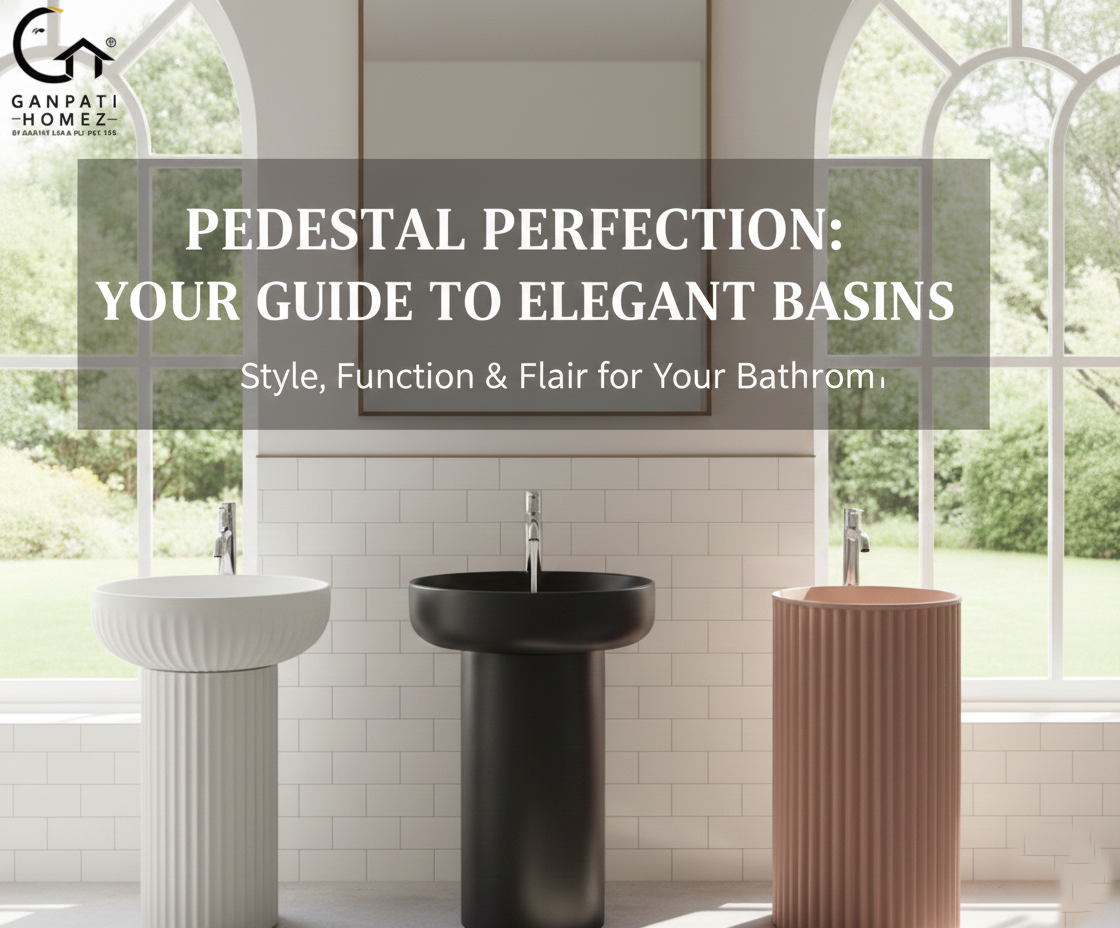
Walk into almost any home built in the last few decades, and chances are you’ll find a pedestal washbasin quietly doing its job. It may not shout for attention like designer vanities or wall-hung units, but it has been part of everyday bathroom life for generations.
From compact city apartments to spacious family homes and even commercial washrooms, the pedestal sink has stood the test of time. In my experience working in the sanitary ware industry, I’ve seen trends come and go but the bathroom pedestal basin remains a dependable choice because it simply works.
By 2033, Deep Market Insights projects that the India Wash Basins Market will reach USD 2175.62 Million.
This guide breaks down everything you need to know about pedestal washbasins, whether you’re renovating, building new, or just trying to understand what suits your bathroom best.
What is a Pedestal Washbasin?
A pedestal washbasin is a two-piece unit consisting of a basin and a vertical pedestal that supports it from below. The pedestal hides plumbing pipes, giving the bathroom a clean and neat appearance.
Unlike vanity basins that rely on cabinets or wall-mounted support, a pedestal washbasin stands independently on the floor. This makes it a popular option for both residential and commercial bathrooms where simplicity and durability matter.
Why Pedestal Washbasins Remain a Classic Choice
Over the years, homeowners and builders continue to choose pedestal washbasins for a few clear reasons:
- They offer a clean, uncluttered look
- They suit almost any bathroom size
- They are budget-friendly compared to vanity units
- They are easy to install and replace
From my industry experience, many customers prefer pedestal washbasins because they strike a balance between function and appearance. They don’t overpower the space, yet they don’t look outdated either.
Types of Pedestal Washbasin Are There
Pedestal washbasins come in a few common variations, and each one works best in a specific kind of bathroom. Choosing the right type depends on space, usage, and the overall look you want to achieve.
Full Pedestal Washbasin: This is the most traditional and widely used pedestal sink. The pedestal runs all the way to the floor and completely hides the plumbing.
Best suited for:
- Standard home bathrooms
- Guest bathrooms
- Commercial washrooms with heavy usage
From a practical point of view, this type is ideal if you want a neat finish without worrying too much about wall strength or exposed pipes. It’s also the easiest to install and maintain, which is why it’s still a top choice for both homes and commercial spaces.
Half Pedestal Washbasin: A half pedestal washbasin is wall-mounted, with a shorter pedestal that covers the pipes but leaves the floor visible underneath.
Best suited for:
- Modern or contemporary bathrooms
- Smaller bathrooms where visual space matters
- Homes where easy floor cleaning is important
This type works well when you want a lighter, more open feel in the bathroom. However, it does require strong wall support, so it’s better planned during construction or renovation rather than as a quick replacement.
Corner Pedestal Washbasin: As the name suggests, this basin is designed to fit neatly into a corner, making use of space that would otherwise go unused.
Best suited for:
- Small bathrooms
- Powder rooms
- Compact apartments
If space is limited, this is often the most practical pedestal washbasin for small bathroom layouts. It provides basic functionality without crowding the area, although the basin size is usually smaller than standard models.
- Go for a full pedestal washbasin if you want durability, easy installation, and a classic look.
- Choose a half pedestal washbasin if your bathroom design is modern and wall support is strong.
- Opt for a corner pedestal washbasin when space is tight and every inch matters.
Each type serves a different purpose, and selecting the right one can make your bathroom feel more comfortable, functional, and visually balanced.
Design Styles: Matching the Basin with Your Bathroom Theme
Pedestal washbasins are no longer limited to basic white designs. Today, they are available in styles that suit almost every type of bathroom, from traditional homes to modern apartments.
- Classic designs feature soft curves and smooth edges. These work best in traditional or family bathrooms where a timeless, familiar look is preferred. They blend easily with standard tiles and chrome fittings and remain visually appealing for years.
- Modern minimalist styles come with sharper lines and slimmer profiles. They are ideal for contemporary bathrooms and smaller spaces, as their clean design helps the bathroom feel more open and organised. These basins pair well with neutral colours and simple accessories.
- European-inspired designs focus on refined shapes and premium finishes. They are often chosen for luxury homes or high-end bathrooms where aesthetics play a bigger role. Such designs complement designer tiles, modern lighting, and high-quality fittings.
Material & Finish Options in Pedestal Washbasins
Most pedestal washbasins are made from vitreous china or ceramic, both known for durability and ease of cleaning.
- Common finish options include:
- Glossy white (still the most popular)
- Matte finishes for modern interiors
- Coloured basins for statement bathrooms
As a sanitary ware basin, quality matters. A good finish resists stains, scratches, and daily wear is something I always advise buyers to check before finalising.
Size & Space Considerations Before Choosing a Pedestal Basin
Choosing the right size is crucial. A pedestal washbasin for home use should feel proportionate to the bathroom.
- Compact basins suit powder rooms and small apartments
- Medium-sized basins work well for family bathrooms
- Wider basins are better for master bathrooms or commercial use
For tight layouts, a pedestal washbasin for small bathroom areas helps maintain free movement while still offering comfort.
Installation Insights: What Homeowners & Contractors Should Know
Installing a pedestal washbasin may look simple, but both homeowners and contractors have different things to keep in mind to ensure the final result is stable, functional, and visually clean.
What Homeowners Should Know
Before installation, homeowners should check that the bathroom floor is even and strong enough to support the pedestal. It’s also important to confirm the basin size and height are comfortable for daily use. Choosing the right location in advance helps avoid awkward placement and unnecessary rework later. A proper installation ensures the pedestal washbasin looks neat and remains secure over time.
What Contractors Should Know
Contractors need to pay close attention to plumbing alignment and wall strength, especially for half pedestal washbasins. Accurate marking, secure fixing, and proper sealing are essential to prevent leaks or movement. From on-site experience, most complaints arise when installation is rushed or alignment checks are skipped. Taking extra care during fitting ensures long-term performance and customer satisfaction.
Pedestal Washbasin vs Other Washbasin Types
Choosing the right washbasin depends on your bathroom size, style, and practical needs. Here’s how pedestal washbasins compare with other common types:
Pedestal Washbasin
- Look: Clean, classic design that hides plumbing.
- Space: Takes up minimal floor space, ideal for medium to small bathrooms.
- Maintenance: Very easy to clean, with no cabinets to wipe around.
- Best for: Homeowners and commercial spaces who want simplicity and durability.
Vanity Basin
- Look: Comes with storage cabinets below the sink.
- Space: Occupies more room; not ideal for small bathrooms.
- Maintenance: Cabinets need extra care to prevent water damage.
- Best for: Bathrooms where storage is a priority, like family homes.
Wall-Hung Basin
- Look: Sleek and modern, floating above the floor.
- Space: Makes the floor area feel open but requires a strong wall for support.
- Maintenance: Easy to clean under the sink but installation can be more complex.
- Best for: Contemporary bathrooms or designer homes with reinforced walls.
Bottom line: For many buyers, the pedestal washbasin remains the safest and most practical choice. It balances style, durability, and ease of maintenance without requiring extra space or complicated installation.
Maintenance & Cleaning: Built for Everyday Use
One of the biggest advantages of a pedestal washbasin is its hassle-free maintenance, which makes it a favourite for both homeowners and commercial spaces.
- No cabinets to clean: Unlike vanity units, there’s no extra furniture to dust or wipe down.
- Smooth, durable surfaces: High-quality ceramic or vitreous china resists stains, water marks, and scratches.
- Quick daily upkeep: A simple wipe with a damp cloth keeps the basin looking fresh and new every day.
For those considering a purchase, this means you get a low-maintenance bathroom solution that stays stylish for years. For current owners, it ensures your basin remains clean and hygienic with minimal effort.
This combination of practicality and timeless design is why pedestal washbasins are also widely preferred in hotels, offices, and public spaces, where durability and ease of cleaning are essential.
Let Us Help You Find the Perfect Basin
At Ganpati Homez, your trusted
sanitaryware store in Bhubaneswar, we know choosing the right bathroom fittings can feel overwhelming. With so many shapes, sizes, and designs, it’s easy to get confused.
That’s why our friendly team is here to guide you. We take the time to understand your space, style, and needs, helping you pick a design that not only looks great but also works perfectly for your daily use. Whether it’s a new bathroom setup or a simple upgrade, we make sure you make the right choice with confidence.
Visit Ganpati Homez and let our experts help you find bathroom fittings that perfectly combine style, durability, and practicality.